Lunar month
Calendar
Ramadan
Ramadan is the ninth month of the Islamic lunar calendar. In Australia the clock, the climate and the commuting day shape when you eat. This page is about food planning, not about a festival listing we do not run.
At a glance
Lunar month
Calendar
Suhoor
Dawn meal
Iftar
Sunset meal
Not published here
Events list
Ramadan is a fasting month, not a restaurant promotion. In Islamic practice it is the ninth month of the lunar calendar, so its place in the Australian civil calendar moves from year to year. This page will not invent a start date, a public-event list, or a crowd size. It will talk about food.
People who fast abstain from food and drink from dawn to sunset. The meal before dawn is commonly called suhoor. The meal after sunset is iftar. What those meals contain is household and community practice. Australian food law does not write a Ramadan standard. AGAHP does not either.
If you are fasting in Australia and you want the food side to be calm:
If you are feeding someone who is fasting and you are not, the kindest thing is a meal they can identify, served when they can eat it. You do not need a lecture on export meat to do that.
Lunar months drift through seasons. Some years the fast is a short winter day. Some years it is a long summer day. That changes how much water you needed before dawn and how ambitious a cook you should be at 8 p.m. after work. We will not quantify hours for a city we have not timed. You can look at a prayer-time source you already trust. This site will not become that source.
Commuting, school hours and summer heat are ordinary Australian facts. They are why a complicated restaurant iftar can be a worse idea than a pot at home. They are why the travel page and this page overlap if you are on the road.
A dawn meal that is mostly sugar will leave you noisy and then empty. A dawn meal that is only black coffee is not a meal. Useful patterns, not prescriptions:
The date and oat bowl exists for this hour. So does leftover tray vegetables. You are not required to cook something new at 4 a.m.
Medication and medical exemptions are not food-blog material. If fasting is medically unwise, that is a conversation with a clinician, not with us.
Many tables open with dates and water. Then soup, then a proper plate. That sequence is common because it is gentle, not because this website measured it.
A good iftar plate is the same as a good Tuesday plate: named ingredients, no alcohol, meat only if you are satisfied. Lentil soup, rice, roasted vegetables, and a yoghurt cucumber bowl will feed people without a catering logo. If you want meat, cook the meat you already buy for the rest of the year. Ramadan does not change the slaughter question.
Shared iftar in a hall is hospitality. It is also a dining-out problem: shared trays, unknown stocks, desserts with gelatin. Ask the organiser the same specific questions, or eat what you brought. We will not publish a directory of halls.
This is how kitchens become chaotic. Shop earlier. Read packets in daylight. The label essay still applies. A box that says “Ramadan special” has told you about marketing, not about gelatin.
If you are buying dates, you are buying fruit. Fruit does not need a religious mark. If you are buying a processed sweet, you are back to additives.
Use the dining-out guide. A set menu can be helpful if the kitchen will talk. It can be unhelpful if every dish is a glaze you cannot see. Say that you are breaking a fast and you need a simple plate. You do not owe the room a sermon.
Alcohol on the next table is a separate social question. This page will not legislate your comfort. It will say that your own glass and your own sauce are still yours to ask about.
Colleagues who want to be kind sometimes bring cake at noon. You can say thank you and name the hour you can eat. Managers who want to be kind sometimes book a 12:30 working lunch; you can ask for the vegetarian box to be saved. None of that requires a statistic about productivity. The old catering article invented social-value numbers. The replacement catering essay refuses to do that.
It will not become a countdown widget. It will not become a ticketed “best iftar” list. It will not become a weather table. It will not tell you that a named chef is hosting a night we have not attended.
Ramadan food is ordinary food under a different clock. Keep the definition from what is halal, keep the packets readable, and let the month be a month rather than a media product.
Not everyone in an Australian house will fast. Children, travellers, and people who are ill may not. A page about food should not pretend otherwise. Cook a meal that can be eaten at sunset and still be ordinary lunch for someone who is not fasting. Leftover rice and vegetables do that job. A single deep-fried iftar does not.
If you are the only person fasting, tell the others the hour. If you are the only person not fasting, do not stage a tasting menu at noon on the shared table unless everyone agreed.
Supermarkets sometimes assemble seasonal displays. A display is merchandising. It does not change FSANZ, and it does not change slaughter rules. Read the packet as you would in March or November. Dates are fruit. A processed sweet is a processed sweet. A “family banquet” box is a box.
If a display helps you find dates, use it. If it tries to sell you a certified claim you cannot verify, walk on.
Shared iftar is one of the better parts of the month for many people. It is also a place where gelatin desserts and unknown meat appear with love. Bring a dish you can describe. Eat what you brought if the answers are vague. You are not rejecting hospitality by knowing your own ingredients. You are keeping the definition from what is halal intact in a noisy room.
We will not publish a city-by-city table of community dinners. Those dinners are organised locally. They have hosts who can speak for the food. We cannot.
A pre-dawn departure and a sunset landing are a water-and-timing problem. Pack suhoor. Pack a small iftar. Do not rely on a kiosk to understand the hour. The travel guide is the bag; this page is the clock. Official overseas advice, if you leave Australia, remains Smartraveller.
The month will end. The method — named ingredients, asked sources, no invented events — stays.
The best iftar is sometimes last night’s rice. Cooking twice a day in a long fast is how kitchens burn food and tempers. Cook once, eat twice. The chickpea pot and the tray vegetables were written for that.
Freeze portions if your freezer is honest — no mystery bags. Label the date for hygiene, not for theology.
If neighbours bring food, ask what is in it, thank them, and eat it at the hour you can. You do not owe a public review. You do not owe this website a photograph.
Keep the clock, keep the packets, keep the questions. Let someone else run the events. This page will still be here when the next lunar month arrives, without a widget pretending to know the hour.
If you remember one Ramadan sentence, remember that the clock changes and the ingredients do not. Pack water. Cook once. Ask the same questions after sunset that you ask in any other month.
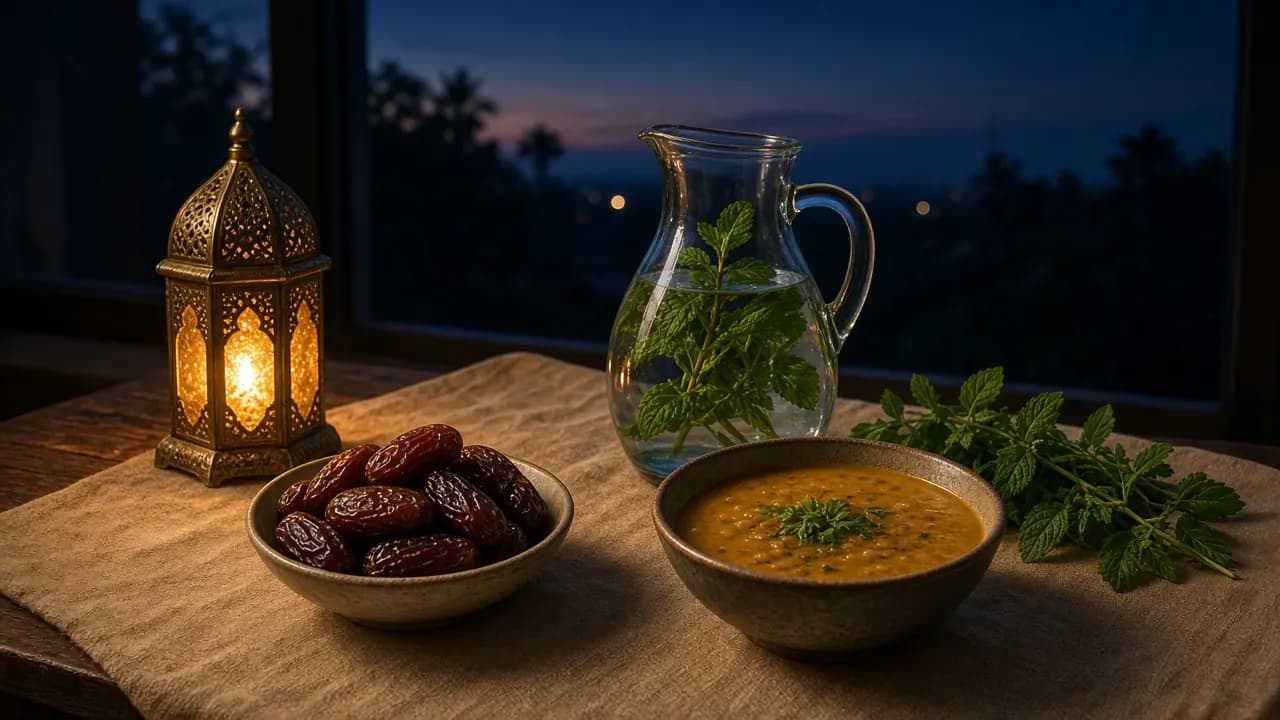
Keep a jug of water where sunset-you can see it. Keep dates or fruit beside it. Keep last night’s rice in the front of the fridge. Those three objects do more for an Australian fast than a banquet poster, and they do not require this site to invent an event.
If colleagues ask how to help, tell them the hour and the ingredients, not a lecture on export meat. Kindness is a later sandwich and a labelled tray. This page will not script their speech beyond that. It will only keep your own food identifiable while the month moves through the Australian civil calendar.
Fasting from dawn to sunset changes when you cook and shop. Plan a simple suhoor, a measured iftar, water, and meals whose ingredients you already accept. This site does not publish opening-hour calendars.
Many households open the fast that way. It is practice, not an Australian food-law requirement.
No. We do not invent events or publish operator listings.
Yes, with the same questions as any other evening. A “Ramadan menu” is still a claim about ingredients.
If you want a suhoor that does not depend on a café, start with the oat bowl and the chickpea pot on the recipes hub.